
Folder permissions
View and manage who can access a folder. Access can be granted through Roles or directly to individual users, while Permission sets define what they can do in the folder.
Folder-level access control is one of the things that separate digital asset management software from a shared drive.
Folder permissions let you control who can access a specific folder and what they can do inside it.
Access can be granted in two ways:
- Roles with access – give multiple users access to the folder through a Role.
- Users with direct access – give individual users access to the folder directly.
Each folder assignment uses a Permission set to define what the Role members or individual user can do.
Account Owners and Administrators are not listed as normal folder permissions because they always have access to all folders.
Open Folder permissions
To see who can access a folder, open or select the folder and click the Permissions icon in the Toolbar.
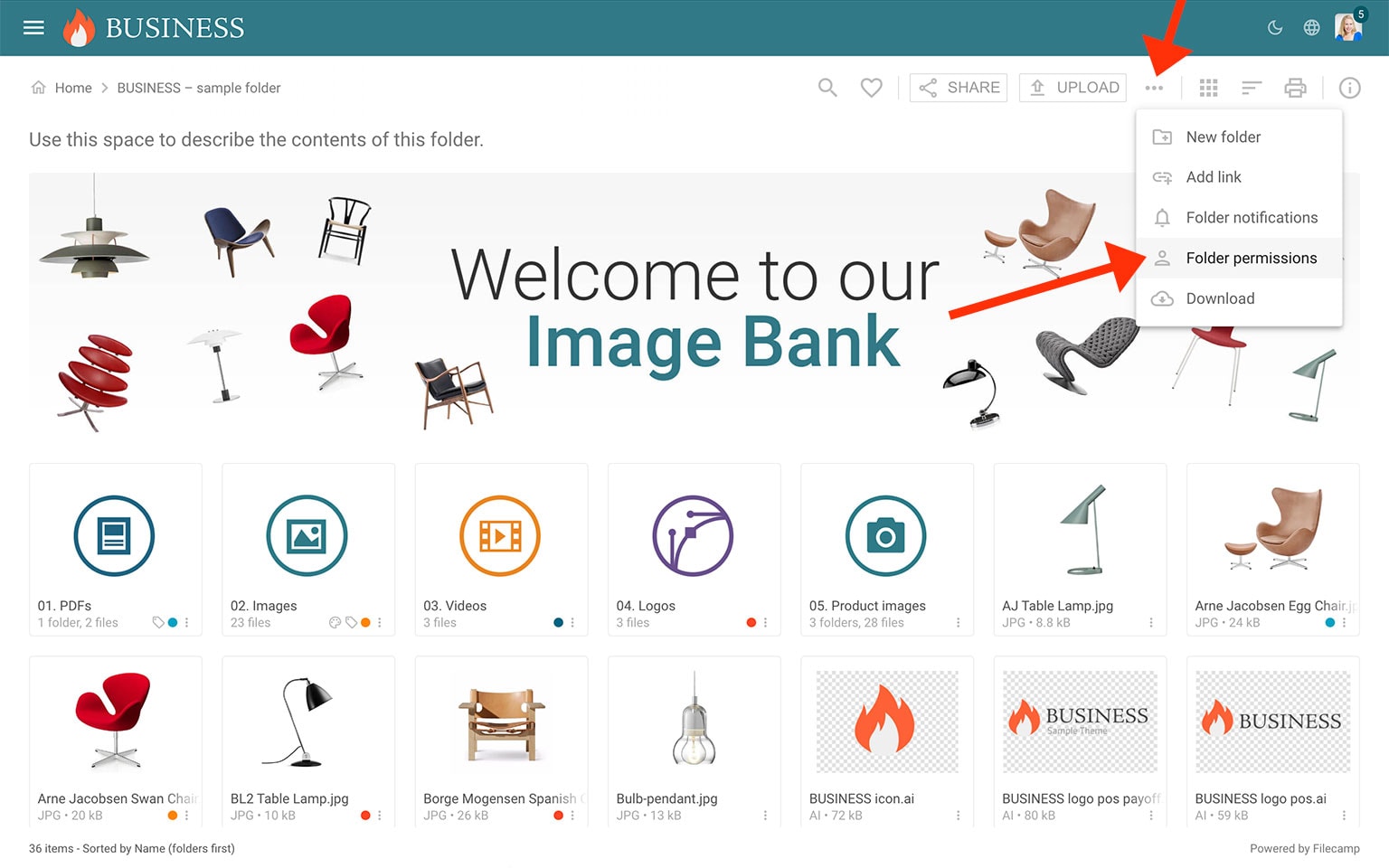
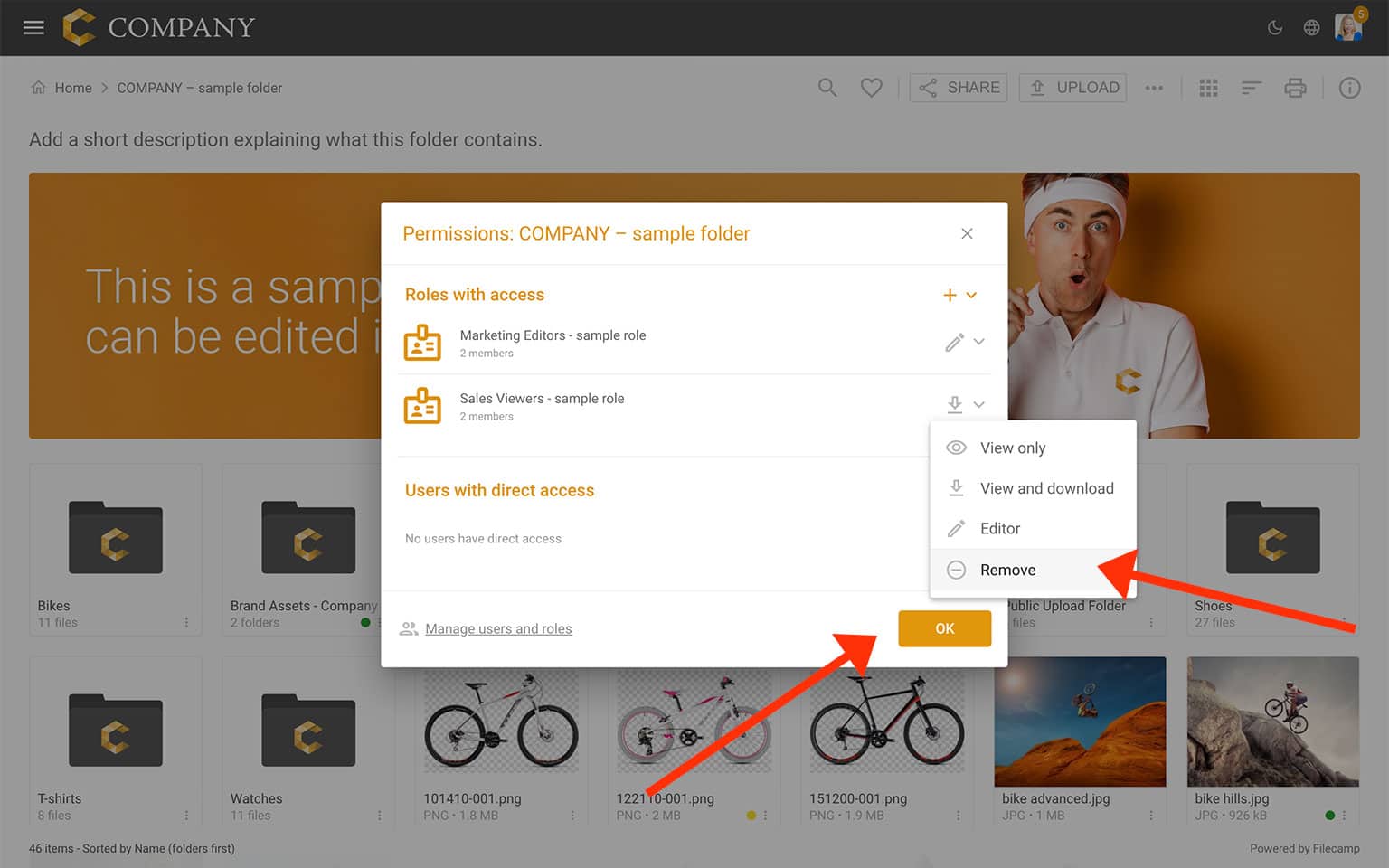
The Folder permissions window shows who has access to the selected folder and which Permission set applies.
The window is divided into two sections:
- Roles with access
- Users with direct access
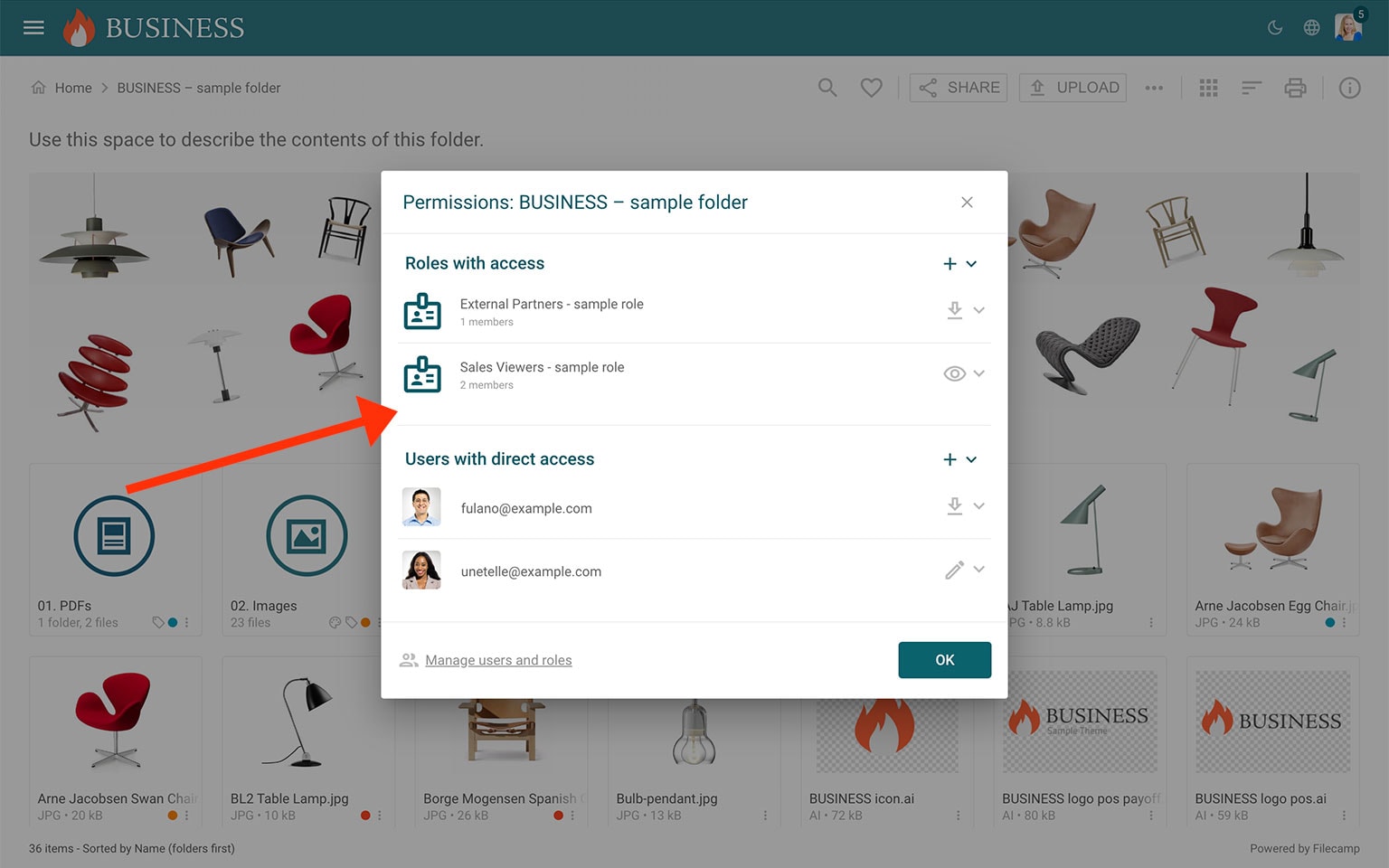
Roles with access
Roles with access shows the Roles that give their members access to this folder.
A Role can include multiple users. When a Role is given access to a folder, all members of that Role receive access through the selected Permission set.
This is the recommended way to manage access for teams, departments, external partners, or other groups of users.
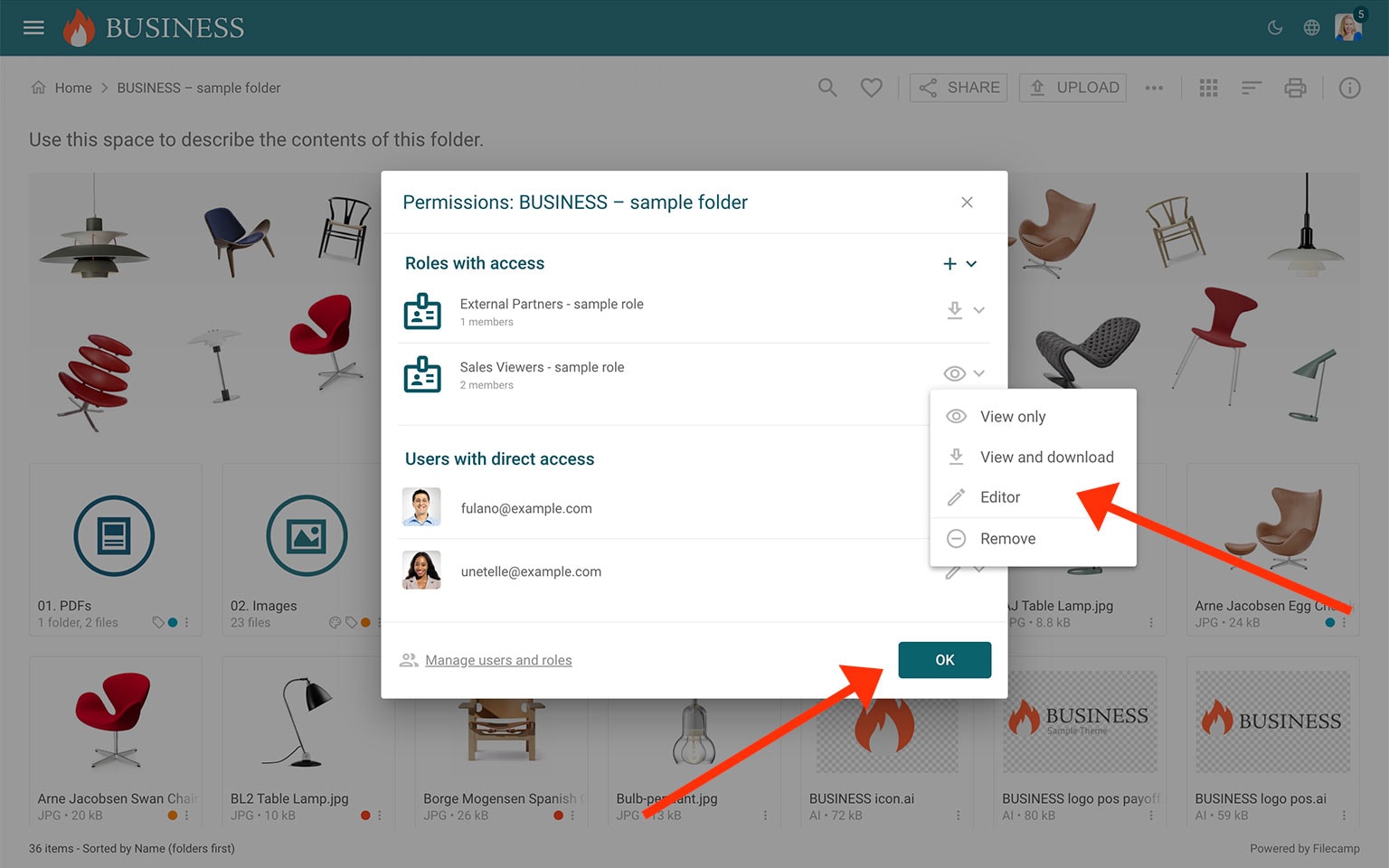
You can change the Permission set assigned to a Role by clicking the Permission set icon next to the Role.
Tip: If several users need the same folder access, use a Role instead of adding each user directly.
Users with direct access
Users with direct access shows individual users who have been given access to this folder directly.
Direct access is useful for individual exceptions. For example, if one user needs access to a private folder that should not be included in a shared Role.
Each direct folder assignment also uses a Permission set to define what the user can do inside the folder.
Tip: Use Roles when several users need the same access. Use direct folder access for individual exceptions.
Permission sets
Permission sets define what users are allowed to do inside folders they can access.
Filecamp includes three built-in Permission sets:
- View only – users can view files and folders but cannot download or share them.
- View and download – users can view and download files and folders but cannot share them.
- Editor – standard access for uploading, editing, organizing, sharing, and managing files and folders.
You can also create custom Permission sets with the combination of permissions you need.
Tip: Roles define who gets access to a folder. Permission sets define what they can do there.
Permission sets can be created and managed from Admin > Users > User settings > Permission sets.
Read more about Permission sets.
Change a Permission set
To change what a Role or user can do in a folder, click the Permission set icon next to the Role or user.
Select one of the built-in Permission sets or one of your custom Permission sets.
The change applies to the selected folder and its subfolders.
If you assign a different Permission set to a Role for this folder, the change applies to all users assigned to that Role.
Add access
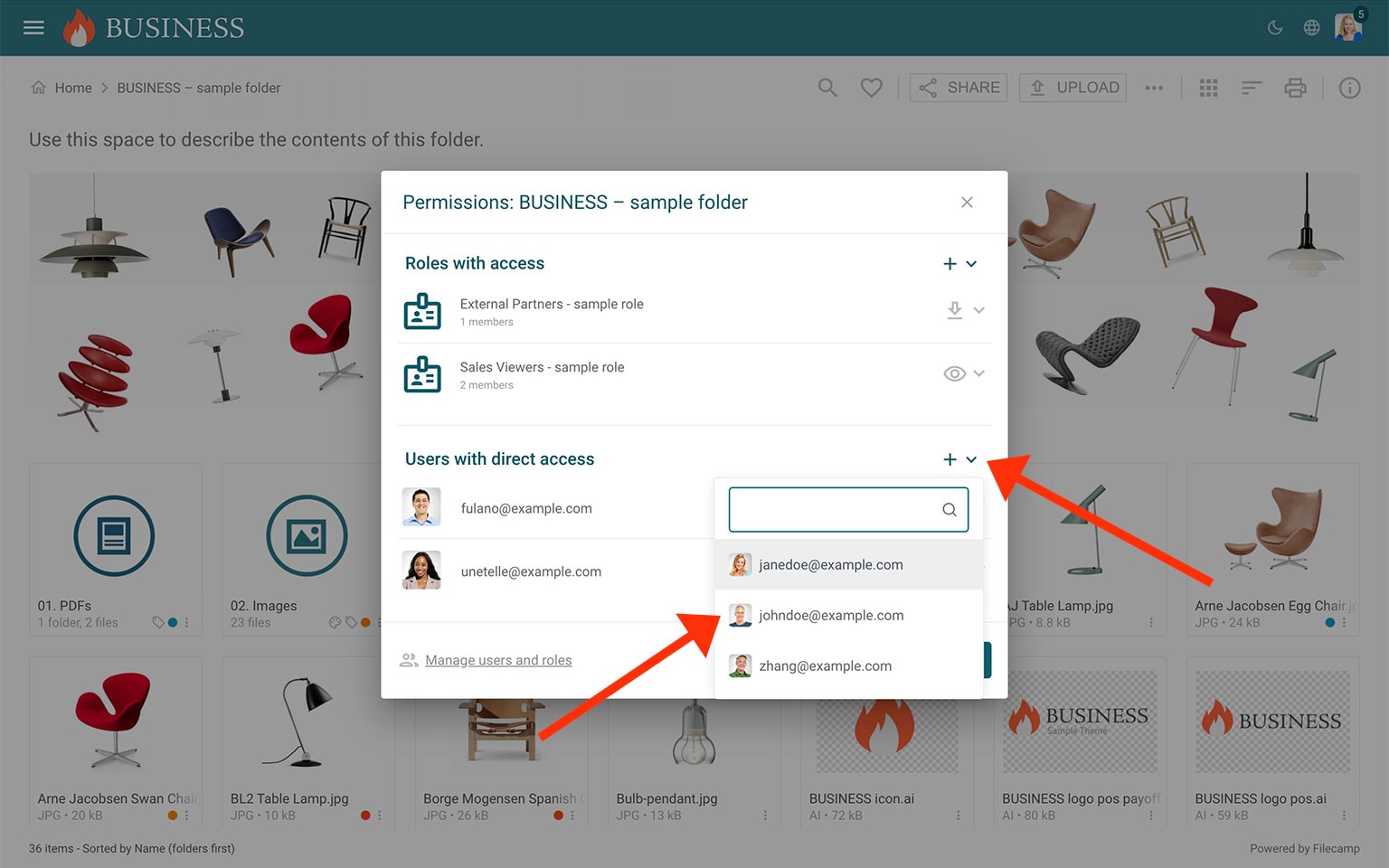
To give additional users access to a folder, click the + icon in the Folder permissions window.
You can add access for:
- A Role – recommended when several users need the same folder access.
- An individual user – useful for one-off exceptions.
After adding the Role or user, select the Permission set that should apply to the folder.
Remove access
To remove access, click the Permission set icon next to the Role or user and choose Remove.
If you remove a Role from the folder, users assigned to that Role will no longer receive access to this folder through that Role.
If you remove a user from Users with direct access, only that user’s direct access to the folder is removed.
Notice: A user may still have access through another Role, another direct folder assignment, or a parent folder.
Manage users, Roles, and Permission sets
Click Manage users and roles to open Admin > Users.
From there, you can:
- Add, invite, edit, or delete users.
- Create and edit Roles.
- Assign users to Roles.
- Manage direct folder access for individual users.
- Create and manage custom Permission sets from User settings.
Important notes
Account Owners and Administrators: Account Owners and Administrators always have access to all folders. They are not shown as normal folder permissions.
Roles and direct access can work together: A user can receive folder access through several Roles as well as direct folder access. Permissions from these assignments are combined.
Permission sets: Permission sets define what users can do inside a folder. If a custom Permission set is changed, the change applies everywhere that Permission set is used.
Parent folder access: Folder access is inherited by subfolders. If access is inherited from a parent folder, it must be changed from the folder where the access was originally assigned.
No listed access: If no Roles or users have been given access to a folder, only Account Owners and Administrators can access it.
TIP: If any access icons are greyed out, the access is inherited from a parent folder. Hover over the icon to see which folder the access can be changed from.